
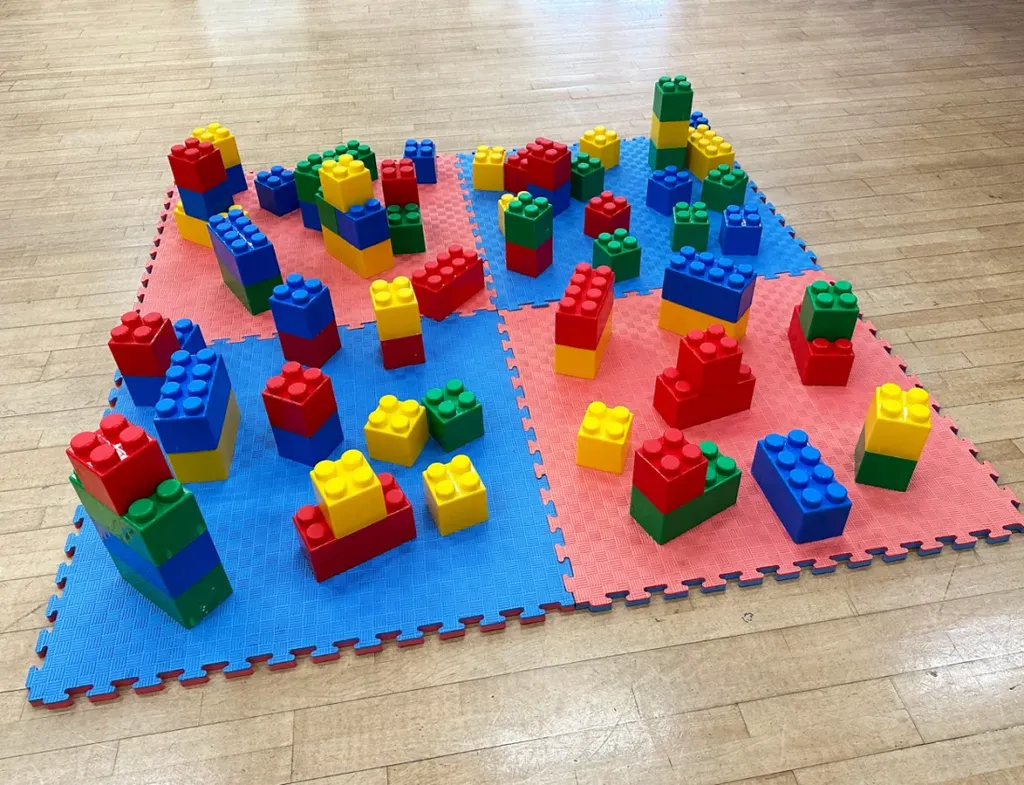
Giant Building Blocks make it possible to turn almost any suitable indoor space into a creative construction area where children can build, explore, and imagine. Giant Building Blocks allow young builders to create towers, forts, castles, bridges, houses, and pretend cities using large, easy-to-handle pieces. With Giant Building Blocks, a living room, classroom, playroom, or activity space can become an exciting building environment. Giant Building Blocks are especially valuable for families and educators looking for versatile play materials that encourage creativity, movement, problem-solving, and hands-on learning without requiring a dedicated construction room.
Why Giant Builds Are Perfect for Indoor Play
Children often enjoy activities that allow them to see their ideas grow in front of them. Large-scale construction provides exactly that experience. Instead of creating a small model on a table, children can make structures that occupy a meaningful part of their play area.
Big construction projects also encourage movement. Children may walk around a structure, carry pieces from one location to another, and repeatedly adjust their designs. This makes building a dynamic activity rather than a stationary one.
Turning Ordinary Spaces Into Creative Areas
A room does not need to be specifically designed as a playroom to support construction. A clear section of a living room, classroom, bedroom, or activity center can become a temporary building zone.
Once the activity is finished, the pieces can be stored away, allowing the room to return to its normal purpose. This flexibility makes large construction toys practical for homes and educational environments with limited space.
Building on a Larger Scale
Large pieces allow children to think about construction differently. They can create walls that are easy to see, towers that rise above their other toys, and structures that they can walk around or interact with.
Giant Building Blocks help make these projects more engaging because children can physically participate in the construction process. For more information about large building blocks for kids, explore their features, benefits, age suitability, and role in encouraging imaginative and educational play.
Benefits of Giant Building Blocks
Large construction activities can support children's physical, cognitive, social, and creative development.
Encouraging Creativity
Open-ended building gives children control over the final result. They can decide whether they want to create a castle, house, bridge, animal habitat, or something completely original.
Giant Building Blocks can be reused in countless ways, meaning the same pieces can support a different creative project every day.
Supporting Problem-Solving
Large structures require planning and experimentation. Children learn that the order and placement of pieces can affect stability.
When a structure falls or does not look the way they expected, children can make changes and try again. This trial-and-error process encourages persistence and flexible thinking.
Developing Motor Skills
Carrying, lifting, stacking, and positioning large pieces can encourage gross motor development and coordination. Children may also practice hand-eye coordination when carefully placing pieces into specific positions.
The physical nature of construction makes it a useful form of active indoor play.
Giant Building Blocks for Different Rooms
One advantage of oversized construction toys is their adaptability. Different rooms can support different types of projects.
Living Room Builds
A living room can become a temporary construction area when furniture is arranged to provide a clear floor space. Children might create a fort, tower, or pretend city.
A designated building area helps prevent pieces from spreading throughout the entire room and makes cleanup more manageable.
Classroom Construction
Classrooms can use large blocks for group projects, learning activities, and free-play sessions. Teachers can create challenges involving shapes, measurement, patterns, and problem-solving.
Giant Building Blocks can also encourage teamwork when children collaborate on one large structure.
Playroom Adventures
A playroom can provide a permanent or semi-permanent construction zone. Children can keep their projects available for longer periods and return to them throughout the day.
Storage shelves and baskets can keep unused pieces organized while leaving enough floor space for construction.
Creative Projects for Any Room
There are many ways to use large building pieces regardless of the room's purpose.
Build a Castle
A castle is one of the easiest large-scale projects to introduce. Children can create walls, towers, gates, and imaginary rooms.
Once finished, the structure can become the setting for role-playing and storytelling. Children can invent characters and adventures that make the castle part of an ongoing game.
Create a City
Children can build houses, stores, schools, parks, roads, and bridges to create an imaginary city.
Giant Building Blocks allow children to construct individual buildings and connect them into a larger environment. This can become an excellent group activity.
Design a Space Station
For children interested in science and space, a pretend space station can provide an exciting challenge. They can build control rooms, laboratories, sleeping areas, and launch platforms.
The finished structure can inspire imaginative missions and encourage children to use space-related vocabulary.
Educational Uses of Giant Building Blocks
Construction play can support learning in natural and engaging ways. Parents and teachers can incorporate simple educational tasks without limiting creativity.
Mathematics and Measurement
Children can count blocks, compare tower heights, identify shapes, and estimate how many pieces they need for a wall.
These activities introduce basic mathematical concepts through direct experience.
Science and Engineering
Building encourages children to explore balance, stability, gravity, and weight distribution. They can test different foundations and observe how structural changes affect their creations.
Giant Building Blocks make these concepts tangible because children can immediately see what happens when they alter a design.
Language and Storytelling
Children can describe their structures, explain how they built them, or create stories involving their creations.
This supports communication skills and gives children a reason to use new descriptive words.
Giant Building Blocks for Collaborative Play
Large construction projects are often more exciting when children work together.
Sharing Responsibilities
Children can divide a project into sections. One child might build a tower while another creates a wall and another works on a bridge.
This encourages cooperation and helps children understand how individual contributions can support a shared goal.
Resolving Design Differences
Children may not always agree about how a structure should look. Working through these differences provides opportunities to practice communication, compromise, and decision-making.
Adults can guide conversations when necessary while allowing children to maintain ownership of their project.
Choosing the Right Large Building Pieces
When selecting construction materials, consider the child's age, room size, material, durability, and storage requirements.
Material and Durability
Large blocks can be made from foam, plastic, wood, or other materials. Lightweight foam may be suitable for many indoor environments, while other materials provide different construction experiences.
Choose products designed for children's use and follow the manufacturer's age and safety recommendations.
Size and Quantity
The ideal set depends on the intended project. A smaller collection may work for towers and simple structures, while larger sets can support forts, cities, and collaborative builds.
Consider how much floor and storage space is available before selecting a set.
Keeping Any Room Organized
Large construction toys can quickly create clutter if there is no storage plan. Designate a specific area for building and use baskets, bins, or shelving for unused pieces.
Giant Building Blocks can be organized by shape or size to make them easier to find. Children can also participate in cleanup by returning pieces to their storage location after each session.
Rotating available pieces can be helpful when space is limited. Keeping some materials stored away and introducing them later can make old construction toys feel new again.
Safety Tips for Giant Indoor Builds
Safety should always be considered when creating large structures indoors. Choose age-appropriate materials and follow the manufacturer's instructions.
Keep construction areas away from stairs, fragile objects, sharp furniture edges, and other hazards. Children should have enough room to move safely around their structures.
Children should also understand that building pieces are for construction rather than throwing. Tall structures should be created in appropriate areas and under suitable supervision.
Inspect pieces regularly for cracks, sharp edges, tears, or other damage and remove damaged pieces from use.
Frequently Asked Questions
1. Can Giant Building Blocks be used in any room?
They can be used in many suitable indoor spaces, including living rooms, classrooms, playrooms, and activity areas, provided there is enough clear space for safe construction and movement.
2. What can children build with Giant Building Blocks?
Children can create castles, forts, towers, houses, bridges, cities, animal habitats, space stations, and many other structures. Open-ended construction allows children to create according to their interests.
3. Are Giant Building Blocks educational?
Yes. Construction activities can support spatial awareness, motor coordination, problem-solving, creativity, counting, measurement, communication, teamwork, and introductory STEM concepts.
4. How can I organize a room for large-scale building?
Create a clear construction area, remove unnecessary obstacles, and provide accessible storage such as baskets, shelves, or bins. Establishing a consistent building zone makes play and cleanup easier.
5. Are large building blocks suitable for group activities?
Yes. Group construction can encourage children to share materials, communicate ideas, divide responsibilities, and work toward a shared project.
Conclusion
Giant Building Blocks provide a flexible way to turn suitable indoor spaces into creative environments for large-scale construction. Whether children are building a castle in a living room, a city in a classroom, or a space station in a playroom, the same construction pieces can support countless ideas. Giant Building Blocks encourage creativity while also supporting motor skills, spatial awareness, problem-solving, communication, and teamwork. With suitable materials, adequate floor space, organized storage, and sensible safety practices, Giant Building Blocks can fit naturally into many different rooms. Their versatility means children do not need a dedicated building area to enjoy meaningful construction play. Any suitable room can become a place where imagination grows, structures take shape, and every new build creates another opportunity to learn and explore.